Virtua Fighter 2 is one of those rare sequels that arrives carrying both a crown and a suspiciously heavy toolbox. It is not merely a fighting game sequel, it is a proof of concept wearing gloves: proof that polygonal fighters could move with grace instead of awkwardly clanking around like supermarket mannequins, proof that Sega AM2 understood timing and spacing as actual drama, and proof that a game could be technically admired while still demanding you learn its manners the hard way. The Windows PC version from 1997, the one I am focusing on here, is a curious little artifact because it does not try to reinvent the thing. It takes the Saturn-based version, pushes the resolution up, adds network play, and otherwise insists that the point is still the same: stand in front of another human being, or a CPU stand-in, and negotiate violence with discipline.
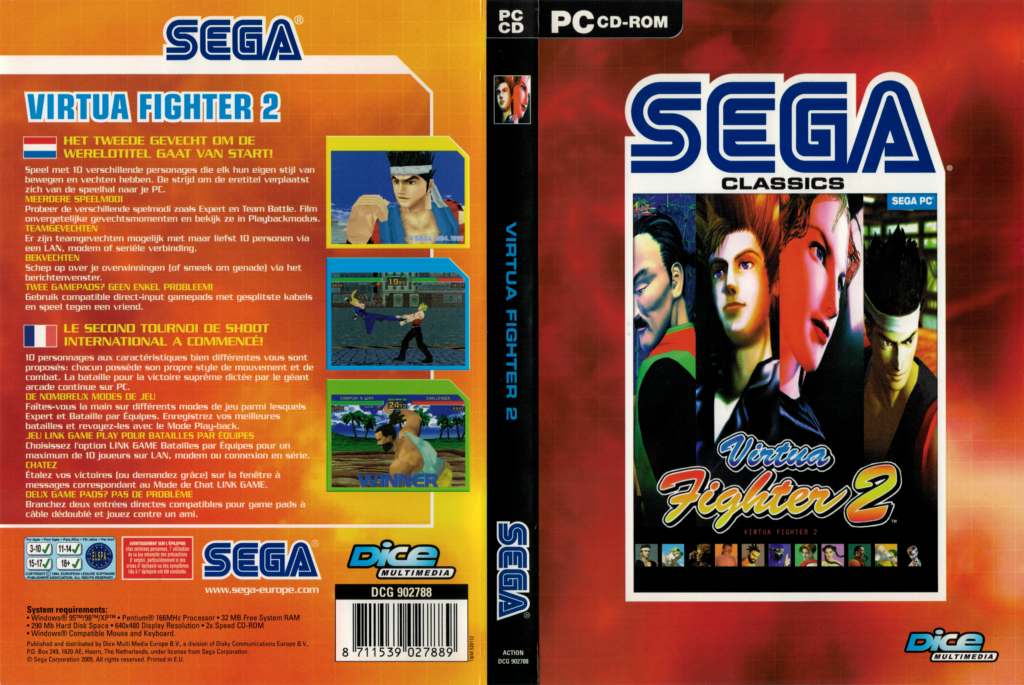
That sounds austere, maybe even smug. In practice, it is often exhilarating. Virtua Fighter 2 belongs to the school of design that believes fighting games should be about movement, timing, and respect for range, not about fireworks stealing attention from the actual contest. It was the second game in the series, developed by Sega AM2 under Yu Suzuki, and it came out of the 1994 arcade scene on Sega Model 2 hardware like a statement of intent. The historical part matters, but only up to a point. I have no patience for games that expect reverence because they were early. Plenty of early 3D games are museum pieces with fists. Virtua Fighter 2 survives because it knows what a clean exchange feels like.
The business end of a punch
The structure is simple enough to write on the back of a cab receipt. Arcade Mode gives you a fighter, a ladder of CPU opponents, and the usual promise that you will be humbled before lunch. VS Mode lets two players sort things out directly. Ranking Mode tracks performance against the CPU and ends on a loss, which is the sort of thing that sounds cruel until you remember that fighting games have always had a slightly militaristic streak and were never really interested in your emotional stability. The roster, as documented, includes eight playable characters, with Dural available through cheat access. That is lean by later standards, but lean does not automatically mean stingy. In a game built on precision, every extra body is another variable in the argument.
What makes Virtua Fighter 2 memorable is not that it overwhelms you with systems, but that it refuses to dilute the ones it has. It wants you thinking in terms of position, commitment, recovery, and whether you have the nerve to act first. That is the whole meal. No sauce mountain, no confetti cannon, no desperate attempt to make every hit sound like an apocalypse. The appeal is the clean, terrible logic of it. You are not really playing a spectacle so much as a duel in a geometry lesson. The best moments come when both players understand the shape of the match and start bluffing, baiting, and punishing each other with the sort of cold economy that makes a crowd lean forward. The worst moments come when you are the one who has not yet learned that the game does not care about wishful button pressing. It is old-school in the most sincere sense, which is to say it can be unforgiving without being dumb about it.
Why the PC version matters
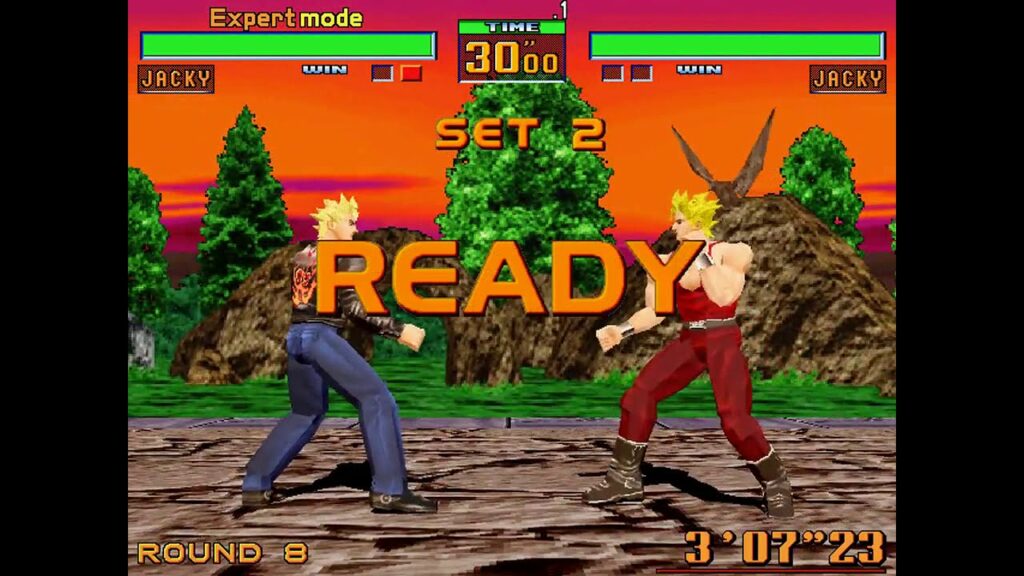
The 1997 Windows release is not just a box to tick in the museum catalog. It is a version with a specific personality. According to the available research, it is based on the Saturn version, not the original arcade release, and it presents the game at a higher resolution. It also adds network play, which is the sort of detail that transforms a straight port into a late-90s time capsule. You can almost smell the dial-up optimism. Here is a game born in the arcade, translated to home hardware, then pulled onto PC and told to behave like a serious software product with a LAN-capable future. That is very Sega, really: always half arcade evangelism, half technological dare.
And yet the PC version’s value is also its limitation. Because it is based on the Saturn conversion, it inherits that version’s identity rather than returning us to the arcade in some pure, Platonic way. The research notes that the Saturn edition remixed the music, added learning AI, ran at 60fps instead of the arcade’s 57.5, and used 2D backgrounds. The PC port, being derived from that version, inherits that lineage. That means the game on Windows is already a reinterpretation of the original, not a pristine relic. I find that oddly fitting. Virtua Fighter 2 has always been less about raw shock and more about engineering the sensation of control. A slightly altered presentation does not betray it, as long as the underlying fight remains intact.
There is also the matter of the release record, which is not perfectly tidy. The North American PC date appears as September 17 in one source and September 30 in another, so the record is inconsistent there. I mention that because it matters to historians and because anyone pretending old PC releases were documented with monastic precision is either lying or hasn’t spent enough time in the archive weeds. What matters to the player, though, is that this is the version that tries to bridge arcade authority and home-computer practicality. That bridge is where the game becomes especially interesting, because it asks a question I have always admired in fighting games: can purity survive adaptation? Here, mostly, yes.
Looks like a machine, moves like a verdict
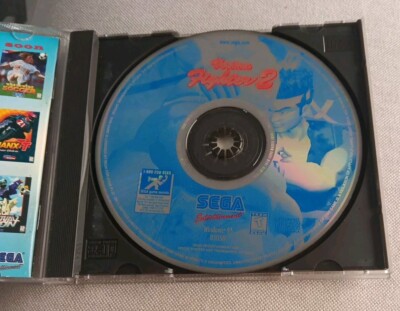
The visual style is the first thing that hits you, and it is still the thing that gives the game its reputation some actual substance. These are 3D polygonal fighters on Sega Model 2 hardware, which in 1994 was enough to make a lot of people stare like the future had just kicked in the door. The miracle is not merely that the characters are three-dimensional, it is that they read clearly. They are not collapsed into sludge, they are not reduced to visual noise, and they do not spend their time disappearing behind the camera’s vanity project. Every action is legible. That is one of the great, unfashionable virtues of old fighting games: they knew that if the eye could not parse the contest, the mind could not enjoy it.
The PC version’s higher resolution should be understood in that context, not as a bragging-rights bullet point but as part of the same cleanliness fetish. This is not a game that wants you squinting through decorative clutter. The hardware, the conversion, and the design are all conspiring toward clarity. I say conspiratorially because there is always a little conspiracy in a great arcade game: the machine, the designer, and your own ego all agree to present failure as if it were fair. The backgrounds in the Saturn lineage are 2D, the energy of the fight is focused inward, and the entire presentation keeps shoving your attention back onto the opponent. Very rude, very effective.
Audio is harder to talk about without drifting into folklore, and I am not going to invent dramatic claims just to sound romantic. What can be said from the source material is that the Saturn version featured remixed music, and the PC port grows out of that arrangement. Good. Fine. Appropriate. Fighting games in this era often understood that music was less about melodic memorability than about maintaining pressure, and Virtua Fighter 2 belongs to that school. It does not beg to be hummed on the bus. It wants to keep your pulse where the match wants it.
The strange dignity of being exacting
What I admire most about Virtua Fighter 2 is that it does not confuse accessibility with softness. It is readable, but not accommodating. It is elegant, but not easy. That distinction matters, because too many games of this type either drown the player in opaque systems or flatten everything until a stray elbow becomes a personality trait. This one has the nerve to be disciplined. It trusts players to notice spacing and timing, and then it punishes them when they do not. In the hands of people who understand its language, the game has a beautiful sparring rhythm, the sort of back-and-forth that makes every successful read feel earned rather than granted.
But let me not overpraise the purity and forget that purity can also be cold. The lean roster, by modern standards, is a real constraint. The structure is similarly concentrated, which means that if the game’s style does not click with you, there is not a huge buffet of alternate pleasures to distract you. Some fighters throw open the doors and let chaos roam the halls. Virtua Fighter 2 locks the doors, checks your posture, and demands that you learn how the room works. That is admirable, but it is also why some players bounce off it and call it dry. They are not entirely wrong. The game can feel like a stern instructor who has no interest in small talk.
Still, dryness is not the same thing as emptiness. There is personality here, just not the loud sort. It lives in the snap of a good read, the little pause before a counter, the sudden collapse of confidence when the opponent has figured out your habits. The arcade original was a hit, and the Saturn port became a major seller in Japan, which tells you something important: this was never some niche academic exercise for people who write essays about frame advantage with a fountain pen. The audience found the pleasure, not just the prestige. That is usually a good sign. Games with no blood in them rarely survive that kind of attention.
Not the whole world, but a very particular one
There is historical baggage attached to this game, of course. It sits at a point where polygonal fighting was not merely a novelty but a competitive promise, and it was helped along by motion capture and the kind of tech-forward showmanship Sega loved when it could make the future look like a spare tire for your living room. It was an arcade hit, the Saturn version was a blockbuster in Japan, and the game acquired a reputation that has followed it like a courteous but persistent ghost. That reputation is deserved in the sense that the game did something genuinely important and still plays with uncommon clarity. It is not deserved if one imagines that importance automatically translates into universal fun. It does not. The same rigor that makes it special also makes it selective.
The 1997 PC release, with its higher resolution and network play, feels like the sensible, slightly anxious cousin of the arcade legend. Not a reinvention, not a betrayal, just a way to extend the life of a very exacting idea into another environment. There is something almost funny about that. A game built on tactile duels and instantaneous reads is asked to live on a home computer, and somehow the compromise does not ruin it. In the 90s that was practically a miracle. More than once, those conversions turned beloved arcade games into technically faithful but spiritually diluted husks. This one does not. It keeps the skeleton and most of the muscle.
That said, I would not recommend Virtua Fighter 2 to anyone hoping for a noisy, reckless, character-driven brawler where every screen is trying to mug your eyeballs. It is too severe for that. I also would not recommend it to the player who equates depth with content bloat. Its depth is in the combat itself, in the strictness of its ideas, and in the way it expects you to meet them halfway. If you want spectacle without discipline, there are plenty of games willing to flatter you. If you want a fighting game that makes every exchange feel like it matters, this is still one of the cleaner arguments ever made for the genre.
So here is my verdict, stripped of museum varnish: Virtua Fighter 2 deserves its reputation because it earned it through clarity, restraint, and actual playability, not because it was first to wave a polygon in the air and call it destiny. The PC version is a smart, sturdy way to experience it, especially if you care about the Saturn-based presentation and its sharper resolution. It is for players who enjoy precision, matchup study, and the grim little poetry of being punished for every lazy decision. It is not for people who need constant sensory bribery, or who want their fighters to behave like theme parks with combo systems. Its strengths absolutely outweigh its flaws, but its flaws are real: a narrow roster, a severe temperament, and a design philosophy that can feel chilly if you do not already speak its language. I still respect it enormously. More importantly, I still want to play it, which is the only compliment that really survives time.
Score: 8/10