TetriNET is what happens when somebody looks at Tetris and asks a dangerous, extremely 1997 question: what if this neat little puzzle about fitting blocks together were also a small online grudge match, complete with sabotage, revenge, and the kind of social friction that makes friendships develop teeth marks? The original PC release, from St0rmCat, is the version that matters here, because it is the foundational prank. Later iterations and ports exist, and the research even notes later work like TetriNET2, but the original TetriNET is the one that matters historically and, honestly, the one that most cleanly reveals the idea before it gets polished, expanded, and given a haircut.
My feelings about it are simple enough to state and complicated enough to defend: TetriNET is ingenious, a little grubby, occasionally brilliant, and very much the sort of game whose best feature is also its most mischievous flaw. It does not merely ask whether you can survive a falling-block puzzle. It asks whether you can survive one while other people are actively building a weather system of spite over your head. That is a terrific premise. It is also, in practice, a premise that depends heavily on the kind of player who enjoys being hit with nonsense and then immediately doing it back.
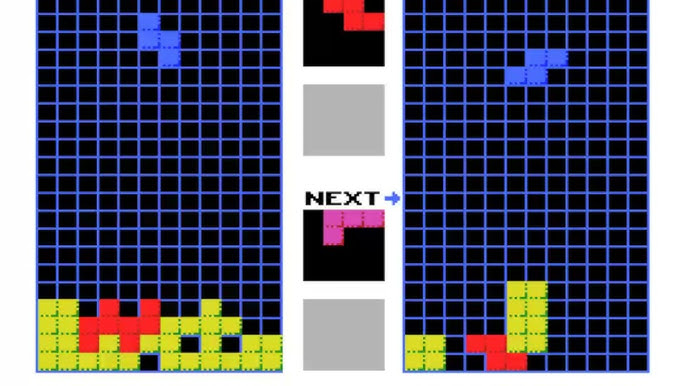
The basic crime scene
The core setup is standard enough to lull you, briefly, into complacency. You are playing a Tetris variant on a 12-wide playfield, competing over TCP/IP with two to six players, and the goal is last one standing, meaning the usual top-out death sentence still applies. Then the game reveals its real personality: line clears can collect special blocks, those special blocks become inventory, and inventory becomes punishment. You can send attacks to opponents, using number keys to target players, and the items themselves can do very rude things indeed, such as gravity changes, field switches, or a nuke that detonates somebody’s carefully maintained order into the nearest ditch. Clear four lines, and you are not just being efficient, you are loading ammunition. The game is Tetris with a locker room full of bullies.
That is the hook, and it is a very strong one. Tetris has always been about making invisible calculations feel bodily, but TetriNET adds another layer: social timing. A good placement is not merely good because it stabilizes your stack, but because it might help you hang onto a special block long enough to deliver trouble at exactly the wrong moment for somebody else. The result is a game where calm, almost monkish block fitting can be interrupted by the delicious irresponsibility of multiplayer spite. You build, you hold, you bait, you strike. It has the rhythm of a bar fight conducted in graph paper.
The special-block system is the thing that keeps TetriNET from collapsing into just another clone with a novelty bolt-on. It changes the emotional weather. Every line clear is no longer just progress, it is procurement. Every clean setup has a second life as a weaponized resource. Even the apparently straightforward act of making Tetrises gets a nasty little aftertaste, because the game rewards bigger clears with more pain to distribute. That is a smart escalation. It turns a solitary puzzle into a multiplayer economy of aggression without needing a dozen baroque subsystems to explain itself.
Why it works, and why it keeps working
The elegance of TetriNET is that it mostly refuses to complicate the base Tetris language. The research is clear about a few key limitations and conveniences: one next piece, no hold, hard drop supported, standard movement and rotation with TetriNET’s own rotation system. In other words, it lives close enough to Tetris for your hands to understand it quickly, but strips away some of the later creature comforts that would make the game too tidy, too managerial. You are not running a modern efficiency dashboard. You are improvising under pressure while somebody else is trying to flood your living room through the ceiling.
And because the game is built around TCP/IP multiplayer and a tiny, ruthless player count of two to six, every decision feels personal. This is not the anonymous drift of a giant lobby shooter where your disgrace can be absorbed into the fog of online life. TetriNET narrows the social field just enough that every item sent feels like a remark, every retaliation feels like a grudge, and every comeback has the shape of a small, petty miracle. Team play also matters here, and that is where the game becomes less obviously chaotic and more subtly nasty, because now the question is not simply who can outlast whom, but who can manage a shared disaster without turning into the weak link in a chain of keyboard warfare.
I admire that the game gets so much mileage out of so little surface area. A lot of multiplayer design still falls into the trap of confusing added systems with added drama. TetriNET does the opposite. It takes a familiar block game, places it in a networked arena, and lets the emotional consequences do the heavy lifting. That is good design. It is also, in a wonderfully unsentimental way, the sort of thing only a 1997 PC oddity would dare to be. This was the era when online play still felt like an experiment you might need to explain to your phone bill.
The rough edges are part of the philosophy, but not all of them are virtues
Still, I would be lying if I pretended TetriNET is pure distilled cleverness. Its minimalism is sometimes a virtue and sometimes a reminder that the game is happiest when the social energy is carrying it. In isolation, or with players who do not embrace the competitive mischief, the experience can look thin very quickly. Standard Tetris remains the skeleton underneath everything, and if the multiplayer pressure is absent, you are left with a pretty austere one-screen puzzle that does not have the luxurious feel of later versions of the formula. No hold piece means no safety net, and that can be exhilarating, but it can also make some sessions feel less like elegant improvisation and more like being forced to juggle in a wind tunnel.
There is also an inherent volatility in the item economy. That is the point, of course, but any system that lets one player’s good play become another player’s immediate headache lives and dies on group energy. If the room is lively, TetriNET crackles. If the room is flat, the whole thing can feel like a good joke told to people who are already checking the clock. This is not a defect so much as a design dependency, but it matters. TetriNET is not a puzzle that politely rewards solitary mastery. It is a weaponized social event, and if the social part does not spark, the event gets its shoes on the wrong feet.
That said, I do not want to overstate the austerity as if it were some tragic flaw exposed by modern standards. The original game is described as a free download, and the historical picture suggests a lean PC release with later Unix-compatible ports and other platform support appearing around it. That distribution story makes a certain sense. TetriNET feels like software that escaped the lab and learned to live in the wild, where people would pass around servers, compare tactics, and treat the game less like a product than like a shared contraption. The record is not perfectly tidy on every implementation detail, and some sources vary on date, with one database listing 1996 while the broader consensus points to 1997. I am comfortable giving the nod to 1997, because the research supports that date more consistently.
Presentation, or the aesthetics of focused menace
The research is frustratingly sparse on visual and audio specifics, so I am not going to invent a sheen that is not clearly documented. What is safe to say is that TetriNET presents itself as a GUI-based, keyboard-driven PC multiplayer game, and that matters because the interface is there to serve the speed of the duel rather than to seduce you with decorative nonsense. The whole thing feels engineered for legibility and timing. That is appropriate. Nobody boots up a game like this in search of sumptuous atmosphere. They come for the stack, the panic, and the moment when a well-placed action turns somebody else’s board into an architectural accident.
If you want mood, you get it from the players. That is the bargain. The game is a social machine more than a sensory one, and in that regard it behaves like a lot of excellent late-90s PC curiosities: not polished in the modern cinematic sense, but focused enough that every added frill would have felt like fraud. I respect that restraint. I also suspect it spared the game from an entire generation of ugly compromises, because the moment you start dressing up a game like this too much, you risk making the violence of the thing seem cartoonish instead of amusingly cruel.
A very specific kind of historical importance
The temptation with TetriNET is to praise it mainly as a precursor, a stepping stone, the game that helped establish online multiplayer Tetris with items before later work refined the formula. That is true, and the research supports that position clearly. But historical importance is not a substitute for playability, and the pleasant surprise here is that the original game does enough right on its own terms to justify the reputation. It does not need to be the sleek final word on the concept. It just needs to be the moment when the concept clicked into place, and it does that with embarrassing confidence.
At the same time, I would not put it forward as some universally idealized relic. The later existence of TetriNET2, with its improved graphics, more special blocks, hold piece, block shadows, and master server, tells you something important: St0rmCat looked at the original and recognized that there was still room to make the whole machine friendlier and more robust. That is not an indictment of the original so much as proof that the original was a sharp idea implemented with the urgency of a first strike. TetriNET is the prototype that was good enough to live, not the polished heirloom that solved every problem forever.
And that is exactly why I like it. A lot of genre history is composed of games that were praised mainly because they arrived early. TetriNET earns more than that. It is early, yes, but it is also mean, structured, and smart about how competitive pressure transforms a familiar puzzle into something socially electric. The items are not a gimmick pasted onto a classic. They are the whole point, and the fact that the game can still stand upright while carrying that much bad behavior says something about the sturdiness of the design.
Verdict
TetriNET is for players who like their puzzle games with dirt under the fingernails, who enjoy the idea of turning competence into harassment, and who can appreciate how a small set of well-chosen mechanics can create an entire culture of revenge. It is not for people who want a solitary, polished, modern Tetris experience, and it is definitely not for anyone who finds multiplayer trash talk exhausting rather than inspiring. Its reputation is deserved, though not because it is the prettiest or most complete version of this idea. It is deserved because the game understood, very early, that Tetris becomes something else the moment your success can be used as a weapon against somebody else.
That is the real trick here: TetriNET is not merely historically interesting, it is genuinely fun in the right room, and still clever even when the room is being stingy. Its flaws are real, especially the dependence on player energy and the relative austerity of the base experience, but its strengths outweigh them by a comfortable margin. It remains a wonderfully petty invention, a multiplayer Tetris variant that turns clear thinking into a competitive insult, and I mean that as the highest compliment.
Score: 8/10