I have a soft spot for games that arrive looking like they spent their budget on charm instead of homework, but I am not so sentimental that I will excuse every joke, puzzle, or pirate flourish just because it comes wrapped in a handsome frame. The Curse of Monkey Island, the third Monkey Island game and the last LucasArts adventure to run on SCUMM, is a deliciously strange object: a glossy, animated, voice-acted comeback that understands the series’ comic DNA well enough to keep the machine humming, even as it occasionally reminds you that polish and genius are not the same thing. It is a game of considerable wit, real craftsmanship, and a few stubbornly old adventure-game habits that still smell like a locked drawer in a room full of skeleton keys.
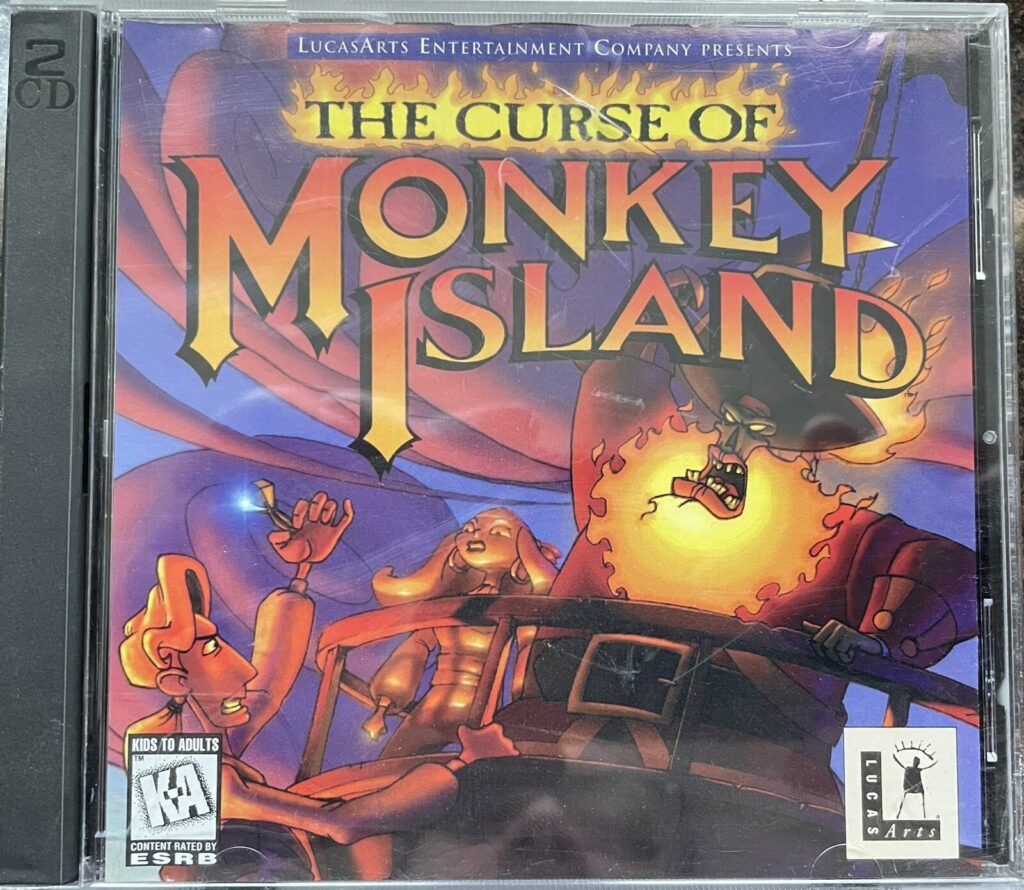
I am speaking here mainly about the original PC release context, the 1997 Windows version that first brought this thing into the world on Halloween, with later digital storefront versions on Steam and GOG keeping the same broad experience alive. The source record on the European release date is messy, which is almost quaint in a way, like finding a typo in a pirate map, but the essential point is clear enough: this is the LucasArts adventure that arrived after the series’ original architect, Ron Gilbert, had moved on, and yet somehow refused to collapse into soulless imitation. That fact matters. You can feel the absence and the confidence at the same time. The game knows it is inheriting a sacred clown suit, and it mostly wears it without stepping on the hems.
The charm offensive, executed properly
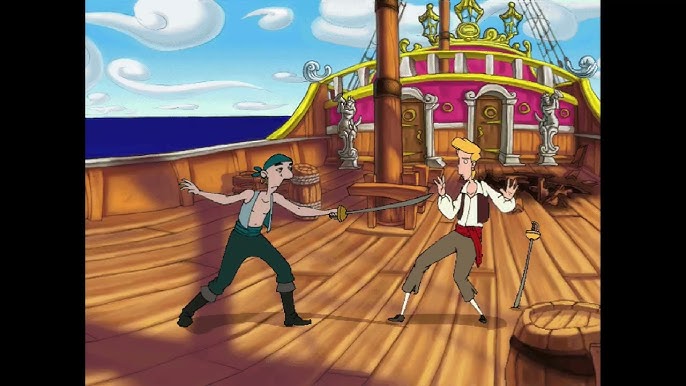
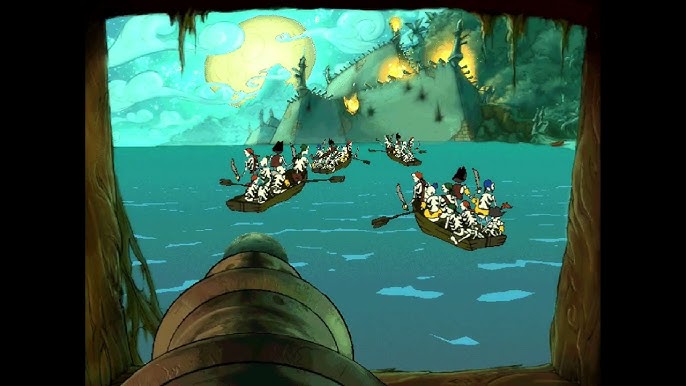
The first thing the game does right is obvious, which is often a sign that somebody actually cared. The high-resolution 640×480 presentation, the animation, the voice work, the music, the whole expensive-looking parade of it all, combine into something that feels much more like a Saturday morning pirate opera than an old text parser with pictures. Contemporary praise for the game leaned hard on its cinematics, and that was not marketing smoke. This thing moves. Characters bounce, mug, stagger, preen, and panic with a confidence that makes a lot of later adventure games look like they were assembled from dry cleaner hangers.
That visual generosity matters because Monkey Island has always been a series powered by personality first and mechanics second. The curse in the title is not only for Elaine Marley or the undead pirate LeChuck, it is also for the entire genre’s habit of making you rummage through absurdity until the next punchline unlocks. Here, though, the absurdity is dressed in enough color and timing to make the rummaging easier to forgive. The game is funny in the way good comic timing is funny, not in the way a joke book is funny. It lands because it keeps moving, keeps performing, keeps understanding that an expression can be a punchline.
The voice acting helps, obviously, but not in the lazy, post-1990s way where “fully voiced” is treated like a magic spell that fixes everything. It helps because the script and performances are working in the same direction. Guybrush Threepwood remains the sort of adventure hero who seems permanently one bad decision away from becoming a cautionary tale, and the game understands that his best trait is not competence, it is endurance. He keeps grinning through catastrophe like a man who cannot quite believe his own legend, which is, frankly, the correct energy for these games.
How it plays, and where the old bones still creak
As a point-and-click adventure, this is very much of its species, and that means its pleasures are inseparable from its annoyances. You explore, you talk, you combine, you try nonsense, and you wait for the game to either reward your cleverness or inform you that you have not yet achieved the correct level of stupid. The available research does not give us a detailed breakdown of the interface or save structure, so I will not pretend otherwise, but the larger experience is familiar enough to anyone who spent the 1990s negotiating LucasArts logic with a mouse in one hand and a growing resentment in the other.
The key thing, in my view, is that The Curse of Monkey Island is better at making its comedy feel earned than many of its genre peers. Too many adventure games confuse puzzle density with wit. They pile object interactions on top of one another and hope the friction itself passes for sophistication. This game, by contrast, tends to understand the rhythm of a scene. It wants to set up a gag, let you inhabit it, then turn the screw. That does not make every puzzle elegant, because no adventure game of this era is allowed to be consistently elegant unless a team of saints secretly built it in a monastery, but it does mean the structure rarely feels random just for the sake of irritation.
Still, let us not romanticize too much. There is a reason adventure games have a reputation for making players feel both clever and patronized in alternating five-minute intervals. The genre’s standard trick is to place you in front of a problem that is either deliciously obvious in retrospect or maddeningly arbitrary in the moment, and this game is not immune to that old pirate curse. Its length, listed in storefront materials at thirty-plus hours, suggests a considerable amount of content, but length in adventure games is a tricky taxidermy trick. It can mean richness, or it can mean the designer has hidden the bread knife somewhere in the pantry and is laughing behind a curtain. The Curse of Monkey Island mostly belongs to the first category, but not always with the grace I would like.
This is where my affection runs into the usual adventure-game wall. I admire the confidence of the writing and the visual design, but I do not confuse that with unconditional forgiveness for the genre’s habitual reliance on lateral-thinking stunts that feel brilliant when they click and smug when they do not. The game invites experimentation, and that is good, but experimentation in this era often meant “try the thing the interface will not warn you is ridiculous until you have spent ten minutes looking like a fool.” That is part of the vintage, yes, but vintage is not the same as virtue.
Why it still works
What keeps the whole enterprise afloat is tone. This game knows how to be playful without becoming wetly self-satisfied. It knows when to pull back and let an animation or a line delivery do the work. It knows that pirate fantasy in games is less about historical authenticity than about swagger, theatrical menace, and the freedom to be gloriously unserious. The undead pirate LeChuck remains a perfect antagonist because he is both silly and dangerous, which is exactly the balance these games need. If the hero is a clown, the villain has to be a proper thundercloud. Otherwise the storm is just weather.
There is also something satisfying about the way this third entry in the series feels like an artifact of LucasArts at a particular moment in its history. It is still SCUMM, but by this point the engine had been extensively upgraded for its last outing, and that gives the whole production a kind of swan-song weirdness. You can feel the old house architecture under the fresh paint. A modern player, especially one meeting it through the Steam or GOG versions, may not care about that technical lineage, and fair enough. But for those of us who remember when adventure games were not museum pieces so much as active little conspiracies among developers and players, the craftsmanship has a tangible texture. You can sense the team making the old machinery dance a little harder before the curtain fell.
It also helps that the game was widely admired at the time, and not just by people already predisposed to love talking skeletons and cursed romances. It was named the best adventure game of 1997 by several magazines, won recognition for its cinematics, and landed high on retrospective best-of lists. That sort of reception can create a halo effect, of course, the critical equivalent of restaurant candles making a bowl of soup seem more expensive. But here the praise is not obviously fraudulent. The game really does have the kind of coherence that most adventure games merely audition for.
Where the reputation starts to outgrow the reality
Yet I would be lying if I pretended this is an untouchable monument. It is a very good adventure game, not a miraculous one, and those distinctions matter. For all its polish, it still belongs to a genre that often mistakes accumulated cleverness for emotional inevitability. The game can be brisk, but it can also be ceremonious. It wants you to admire the gag before you solve the gag. Sometimes that is a feature, sometimes a vanity. When the rhythm is right, it feels like a cartoon with impeccable timing. When it is off, it feels like waiting for a stage magician to finish checking his cuffs.
And because it is a LucasArts adventure from an era that loved luxuriating in dialogue, there are moments where the game seems more interested in being amusing than in being dramatically necessary. That is not the worst sin in the world. I would rather a game swing for character-driven comedy than pretend that opening another gate counts as narrative depth. But I do think the reverence surrounding The Curse of Monkey Island sometimes papers over the fact that its best qualities are concentrated in its presentation and tone, while its actual puzzle play remains a product of its time, with all the beautiful and irritating baggage that implies.
The commercial record is also a mess, though not in a way that changes the experience on your desk. Available figures range wildly, from modest North American retail numbers to much larger lifetime estimates from people associated with the game. The correct response, unless you are writing a shareholder memo or a shrine plaque, is simple: the exact number is disputed, and the game’s cultural footprint cannot be reduced to a sales spreadsheet anyway. What matters is that it endured, which is why we are still talking about it, and why people still feel compelled to package it for modern systems decades later. But endurance is not the same thing as perfection. Plenty of things survive because they were beloved, not because they were unimprovable.
The final verdict, minus the fog machine
I like The Curse of Monkey Island a great deal. I do not love it with blind, fanclub devotion, because I have spent too many years watching admired adventure games get absolved of their own obscurities. What I admire here is more specific: the animation is superb, the voice work and music support the comedy instead of merely adorning it, the writing understands the series’ absurd pirate romanticism, and the whole package feels like a confident, expensive, very human effort to keep a beloved formula alive at the end of an era. That is no small thing.
Who is it for? People who enjoy point-and-click adventures, comic fantasy, and games that treat performance and atmosphere as part of the puzzle. Who is it not for? Anyone who wants frictionless design, immediate mechanical clarity, or a game that never asks you to think like a slightly deranged theater understudy. Does it deserve its reputation? Yes, mostly. The praise is justified, though occasionally it sounds a little too eager to bow before the costume jewelry. Do its strengths outweigh its flaws? Absolutely. The flaws are real, but the charm is stronger, the craft is higher, and the whole thing still feels like a talented crew sneaking one last glorious pirate joke past the gates of the new millennium.
Score: 8/10