NHL 98 on PC is what happens when an annual sports series stops pretending that bigger numbers on the box are enough and actually tightens the screws. It is not a revolution, and thank heaven for that, because revolutions in late-90s PC sports games usually meant somebody had discovered a new way to make the menus slower. What EA Sports delivered here, at least on the IBM-compatible Windows side of the ledger, is a hockey game that seems to understand a basic truth the genre kept forgetting in the mid-90s: the point is not merely to simulate hockey, the point is to make the act of thinking like a hockey player feel rewarding for more than ten minutes at a stretch.
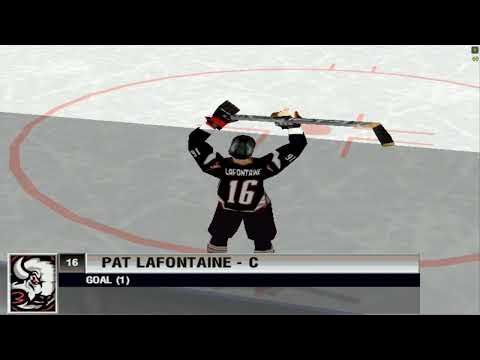
That sounds like a small claim, but in the context of the era it is practically a manifesto. The PC version, released in 1997, is a licensed NHL game with real teams and players from the 1997-98 season, and the available contemporary impressions point to a familiar EA structure, season play, adjustable rules, multiple difficulty levels, and a control scheme that expects you to do more than mash one button and pray. I am deliberately keeping that broad, because the surviving PC material is clearer on feel than on a tidy manual-style feature list. And honestly, that is probably the most revealing thing about the game. NHL 98 is remembered less as a menu tree than as a set of repeated sensations: the snap of a pass, the cruelty of a missed read, the satisfaction of a one-timer that actually works because you earned the angle instead of because the game decided to be generous.
What it gets right, almost annoyingly right
The best thing I can say about NHL 98 on PC is that it sounds and plays like a developer finally trusted the player enough to stop over-explaining the sport. One Usenet impression from the time praises the AI on both offense and defense, and that matters more than any box blurb about authenticity. Hockey lives and dies on response, on whether the game sees the lane you thought you had and slams it shut before your little fantasy of control can bloom. Here, according to those contemporary reports, the AI is active enough to make you earn clean possessions, which is exactly the sort of thing a hockey game should be doing instead of letting you skate through a polite parade of cardboard defenders.
Passing is another area where the game seems to have found its teeth. A player report from the period describes pass completion in practical terms, noting that accuracy climbs dramatically when you pay attention and stop throwing the puck around like a shop class experiment. That is a good sign. It suggests the game is not rewarding random input so much as timing and awareness, and that is the difference between a sports game that feels like an argument and one that feels like a lie. The same impressions also mention one-timers working well, which is exactly the sort of mechanical payoff that can turn a decent hockey sim into a satisfying little obsession. There are few pleasures in sports gaming as clean as a one-timer set up by an actual read, the puck arriving just in time, the shot launched before the defense can finish being clever. When that loop works, you start thinking in sequences instead of commands, and that is where hockey games become sticky.
The keyboard control setup, by the accounts I have, is also unusually capable for its era. One GameFAQs review specifically notes surprise at how many actions can be handled from the keyboard, including line changes. That is the kind of detail that tells me the PC version is trying to be serious about the sport rather than merely decorative. It is easy, decades later, to laugh at keyboard sports controls as if they were quaint fossils from a time before the controller solved all problems. But on a PC in 1997, depth mattered. If the game can let you move, pass, shoot, check, and swap lines without turning the whole thing into a bureaucratic nightmare, then it is respecting the pace of hockey instead of fighting it. The controls are not the spectacle. They are the chassis. And from the contemporary accounts, NHL 98 seems to have a chassis that behaves.
The difficulty settings also sound properly tuned for a sports game that knows it has to serve more than one temperament. Reports mention Rookie, Pro, and All-Star. Rookie is described as useful for learning and too easy after that, while Pro apparently turns serious enough to make you work. That is exactly how a hockey game should structure itself, not as a binary of baby mode and punishment mode, but as a ladder that lets you learn how to stop panicking before the puck starts teaching you humility. A lot of sports games confuse challenge with opacity. NHL 98, at least by these reports, seems more interested in escalation. You are allowed to become better in public. What a concept.
Presentation with a pulse
The visuals, from the available PC impressions, are generally spoken of as strong for the time, though not as some sort of sacred technical milestone. That feels right. NHL 98 looks like a late-90s sports game trying to convince you that clean presentation is a form of realism, and on that front it probably succeeds more often than it fails. I am not going to invent specifics the record does not support, because the difference between criticism and folklore is usually whether you start making up resolution numbers when no one asked. What I can say is that the game appears to have been received as competent and attractive enough to support the action rather than distract from it, which is the correct order of priorities. Hockey is already visually chaotic. You do not need the interface acting like it has been hit in the head.
The audio seems more interesting. One PC player specifically mentions Dolby Surround support, which is one of those delightfully period-specific details that makes me feel the ghost of a beige tower humming under a desk in 1997. That was the era when a sports game could still impress by proving it understood your fancy speakers existed. But beyond hardware bragging rights, it hints at a mix that cared about spatial energy, about giving the rink a sense of venue and presence. A hockey game without a good soundscape is just shinier accounting. The report of strong graphics and sound suggests that NHL 98 at least understood the theatrical side of the sport, the scrape and thud and crowd noise that make a game feel like an event rather than a spreadsheet with gloves on.
There is also a very late-90s PC flavor to the whole thing, one that I find almost endearing now and mildly irritating in memory. A thread from the time raises concerns about hardware requirements, which is as much a part of the PC sports-gaming experience as checking the box for a working joystick or discovering that your sound card has opinions. The record I have does not give the exact specs, so I will not pretend it does. But the mere existence of that conversation tells you the terrain: this is a game made at a moment when getting a sports title to run on your machine was still an achievement with paperwork attached.
The annual update problem, solved better than expected
Every yearly sports sequel faces the same accusation, whether it deserves it or not: are you actually new, or just wearing last year’s jacket with a different athlete on the sleeve? That suspicion hangs over NHL 98 too, and understandably so. EA’s annualized sports empire trained players to expect iteration at the pace of commerce, which is often a polite way of saying they sold us the feeling of progress and hoped we were too busy arguing about rosters to notice the plumbing.
But the contemporary reactions here suggest that NHL 98 did more than change the calendar. Multiple players compare it favorably with NHL 97, specifically pointing to better gameplay and stronger AI. One review notes that someone who expected a minor update after owning NHL 97 was “totally surprised,” which is the sort of phrase that makes me sit up a little. Surprise is rare in annual sports games unless the surprise is catastrophic. If a player coming from the previous installment feels the difference immediately, then the sequel has done the most important thing a sequel can do, it has justified its own existence by changing the texture of decision-making.
That does not mean the game is a martyr to innovation. Far from it. The appeal here is not experimental daring, it is competent refinement. Which, in a series that could have become a factory of self-copying, is not nothing. In fact, I would argue it is the only honest path available. Sports games do not need to reinvent the puck every year. They need to make you believe that the puck is still dangerous. If NHL 98 sharpens passing, improves defensive and offensive intelligence, and makes the control scheme deep enough to support actual tactical play on a keyboard, then it has done the annual sequel job properly, even if it has not set a fire in the rafters.
What I cannot quite forgive
Now, let us be grownups about this. The source material available for the PC version is mostly player impressions, which means some caution is mandatory. I can say that the game appears to have season play, multiple difficulty settings, and options consistent with a serious hockey sim, but the exact mode list and full rule-set detail are not cleanly documented in what I have. I can say the controls are flexible and the AI is well-regarded, but I cannot honestly pretend to have a pristine manual in hand with every toggle labeled in stone. That uncertainty matters, because a lot of the PC sports experience in this era was a negotiation with installation, configuration, and the occasional cranky setup dialog. The game may have been sturdy, but the ecosystem around it often was not.
And while the game appears to have improved the fundamentals, I do not want to award it imaginary elegance just because it fixed the most important things. Annual sports titles can be good at the core and still feel like they are operating under commercial supervision, as if the series had a board of directors somewhere insisting that each year must include enough visible change to justify the existence of the logo. NHL 98 seems to avoid the worst of that, but I still sense the familiar corporate compromise under the ice: not enough room for wild personality, not enough nonsense to be memorable in a truly weird way, and not enough radical design to turn it into a cult object on its own terms. It is a better game than a lot of its polite reputation might suggest, but it is still a product from the era when polish often arrived with a faint odor of obligation.
That may sound harsher than intended. It is not really a complaint, more a warning label. The game’s virtues are real, but they are the virtues of execution, not of transcendence. It takes the sport seriously, it handles itself with some confidence, and it appears to have improved the actual act of playing from the previous year. Great. That is what I want from a hockey game. But I also want a little swagger, a little identity, a little sense that the designers knew they were making something people would spend winter evenings with, not merely filing under “better than the last one.” On that front, NHL 98 is competent, sturdy, and pleasingly responsive, but not especially mischievous. It does not kick the door in. It opens it properly and asks you to remove your skates.
The verdict from the penalty box
I respect NHL 98 on PC because it seems to understand the pleasures of hockey rather than merely the structure of a licensed league. The passing is reportedly sharper, the AI is more convincing, the keyboard controls are more capable than you might expect, and the difficulty settings give the game room to breathe from learning mode to serious competition. The sound support, including Dolby Surround on compatible hardware, gives the whole thing a proper late-90s PC sheen without turning it into a tech demo in shoulder pads. It sounds, in other words, like a sports game that got its act together.
It is not the sort of game I would call essential because of its historical importance alone, and I would distrust anyone who tried to sell it that way. But if you want a PC hockey game from this period that seems to have improved the series’ fundamentals rather than merely restocked them, this is a very respectable place to skate. It is for players who enjoy the logic of hockey, who do not mind a keyboard if it gives them control, and who appreciate a sequel that quietly fixes the important stuff. It is not for anyone looking for flashy revolution, mascot energy, or the kind of personality that makes a sports game feel like a cult artifact instead of a well-made annual installment.
Does it deserve its reputation? Yes, modestly. The praise appears earned, but not with fireworks. Its strengths outweigh its flaws because its strengths are the things that actually matter in a hockey game: AI, passing, control, pace, and the sense that skill produces cleaner outcomes. That is enough for a solid recommendation, even if it stops short of greatness. NHL 98 is not the loudest entry in EA’s hockey archive, but it may be one of the smarter ones, and in this genre that is usually the more valuable compliment.
Score: 8/10