Star Trek: Starfleet Academy is the sort of game that makes me feel like Interplay found a very expensive starship bridge in a pawn shop, dragged it into the office, and then said, with admirable confidence, “Right, now let’s build a simulator around the feeling of being assigned homework by Spock.” On paper, that is irresistible. In practice, the 1997 PC original is a half-and-half machine: half command fantasy, half FMV soap opera, with enough charm and enough awkwardness to keep it from becoming either a disaster or a genuine classic. It is a game about Starfleet discipline, but it is also a game about the compromises that happen when a publisher wants the glamour of Star Trek, the structure of a flight sim, and the convenience of a budget that probably began coughing up glitter somewhere around the second engine change.
That makes it unusually easy to admire in theory and mildly exhausting in practice. I do admire it, to be clear. I also spent a lot of time thinking, “Yes, but would I rather be playing something that trusts the player a little more?” The answer, quite often, is yes. Starfleet Academy is not a bad game. It is a game with a strong personality, a good license, and a slightly overcomplicated relationship with its own ideas.
The dream: cadet life, bridge duty, and the wholesome tyranny of Starfleet
The premise is the hook, and it is a good one. Instead of handing you the usual Star Trek fantasy of captaining the Enterprise and casually solving diplomacy, you are a cadet at Starfleet Academy. That shift matters. The game lets you inhabit the bureaucratic, teenage, mildly humiliating side of the Federation mythos. There is academy life, there are personal issues, rivalries, Klingon tensions, and all the little interpersonal frictions that make a military institution feel like a school and a school feel like a controlled experiment in stress. The FMV sequences do a lot of heavy lifting here, and they are not just decorative. They are the game’s way of saying that command is not born in the simulator room, it is earned in the social mess between missions.
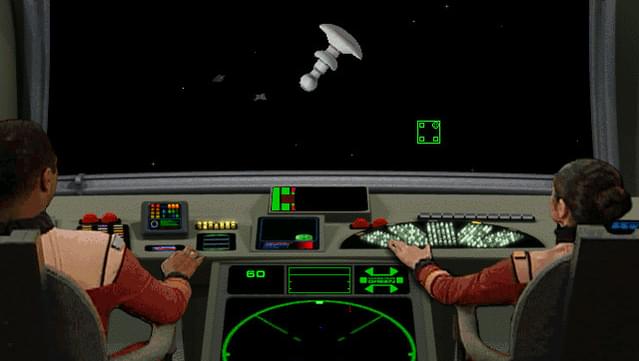
And then, with pleasing ceremonial pomp, the game throws you into simulator missions where you command a starship bridge against enemy vessels, including Klingon Bird-of-Prey and Romulan cruiser types, among others. This is where Starfleet Academy reveals its real ambition: not merely to be a Star Trek story, but to make competence itself feel like the fantasy. You are not just blasting things, you are being evaluated. The game reportedly offers 25-plus missions, and the structure is all about ingenuity, leadership, and courage, which is Starfleet code for “don’t be a drooling maniac in a chair with photon torpedoes.”
That is a smart idea. It is also, inevitably, a dangerous one. Games built around evaluation tend to make every mistake feel like a personal failing, and Starfleet Academy is not always graceful about that tension. But when it works, it has the precise flavor Star Trek should have had more often in games: not fantasy power, but responsibility under pressure.
How it plays, and where the seams show
The core interface is wonderfully tactile in that late-90s PC way that feels both ambitious and a little hostage to the mouse. You pan around a simulated starship bridge, interact with crew stations, then click into full-screen station mockups where buttons and sliders let you adjust ship performance. That is the game’s most striking design flourish, because it turns command into a ritual of tiny adjustments and visual confirmations. It wants you to feel like you are moving through a ship, not issuing abstract orders to invisible subsystems. Interplay understood, at least here, that Star Trek is as much about bridge choreography as it is about weapons fire.
The trouble is that choreography can become fussiness. The interface is conceptually elegant, but the game asks you to live inside a set of layered spaces: bridge view, station view, mission objective, FMV academy sequence, crew drama, combat execution. That is a lot of ceremonial switching, and not every transition feels clean. The game is at its best when it makes the bridge feel alive, when the act of clicking from station to station reinforces the fantasy that you are coordinating a living crew. It is at its worst when that same structure makes you feel like you are shuttling between windows in a very earnest office system that happens to have phaser arrays.
The source material also makes clear that the game’s structure is split roughly between FMV and simulator missions, which is both its identity and its biggest vulnerability. Half the game is story and academy life, half is simulated command. That balance sounds healthy until you realize how much depends on whether you find the FMV material engaging. I did, intermittently. The cutscenes, with original Star Trek actors such as Kirk, Chekov, and Sulu, give the game a little franchise electricity that most licensed titles can only fake with music cues and regret. There is something appealingly unembarrassed about that cast presence, a sense that the game is reaching back into the franchise’s ceremonial past and saying, “Please, let us borrow some legitimacy.”
The problem is that legitimacy is not mechanics. The FMV material can invest the missions with context, but it cannot rescue a weak or repetitive command loop if the command loop is not pulling its own weight. And this is where Starfleet Academy becomes harder to defend. It has ideas about leadership, about interpersonal tension, about tactical discretion, even about peaceful resolution, which is nice to see in a Star Trek combat game and arguably essential to the license. But the game’s actual dramatic rhythm can feel lopsided, because FMV sequences demand patience and the simulator demands precision, and neither mode completely covers the other’s defects. One mode gives you texture, the other gives you agency, and they do not always fuse into a single, irresistible rhythm.
What saves it: tone, license, and the old Star Trek seriousness
If this all sounds a little stern, that is because the game is stern. It wears its Starfleet badge with unusual seriousness. This is not a jokey Trek game, not a wink-and-nudge theme park ride, and not the sort of license product that assumes your only job is to recognize faces. It is trying to make you care about procedure, consequence, and command. That makes it unusual even now, and in 1997 it must have felt downright contrarian. So many licensed games want to turn a beloved universe into a parade of recognizable things. Starfleet Academy wants to turn it into a job interview.
That seriousness is part of why the cutscenes matter so much. With the original cast presence in the mix, the game has a line back to the older, more formal Star Trek temper. Even when the acting lands in that broad FMV zone where every emotion is slightly more visible than it ought to be, the presentation keeps the whole thing anchored in franchise ritual. There is a comfort to that. Star Trek, at its best, is a world of uniforms, ranks, protocols, and people trying to hold themselves together under impossible expectations. This game understands that better than many flashier Trek projects ever have.
And yet I cannot hand it too much praise for understanding the idea if the execution keeps asking for indulgence. The big argument in its favor is not that every mission is a winner, but that the game’s structure gives Star Trek fans something unusually specific: the fantasy of being a cadet learning to command, not a captain already polished into legend. That is a stronger premise than it first appears. It is also one that puts more pressure on the game to make progression feel meaningful. The research here supports the notion that the game is about being assessed, about being made to prove yourself. Good. I like games that let the player sweat for a uniform. But the whole thing only works if the assessment feels like a fair test rather than a series of ceremonial approvals wrapped around slightly rigid mission design.
The texture of 1997, for better and for worse
As a 1997 PC release, Starfleet Academy sits in that wonderfully awkward late-period zone where CD-ROM spectacle had enough confidence to be expensive but not enough elegance to be seamless. The FMV cutscenes are the obvious headline, but the bridge simulation gives the game its tactile identity. This is not an action game in a smooth modern sense. It is a game that wants you to inhabit apparatus. You are constantly reminded that command is mediated by consoles, by screens, by controlled spaces, by the labor of translating crisis into interface inputs. That is good thematic design. It is also the sort of thing that can feel slow if you are not in the mood for its deliberate pace.
I should note the modern compatibility caveat because the record says so: the PC version can require workarounds on current systems. That is not shocking for a game of this era, but it matters if you are imagining a frictionless revisit. It is available again through Steam in a digital re-release that preserves the original storyline, cutscenes, and missions, which is the right kind of preservation, even if “the right kind” does not automatically mean “the most convenient kind.” The point is that the game’s identity survives the rerun. The question is whether its habits have aged into character or into inconvenience. The answer is a bit of both.
There is also a useful historical note from the available research: the PC version is described as the final version after delays, an engine change, and feature cuts from earlier console concepts. That helps explain why the game sometimes feels like a compromise between competing ambitions. You can sense the outline of something broader, maybe a different shape of project, and the finished PC release seems to be the version that survived the meeting after the dream had been pared down by reality. That is not a criticism so much as an atmosphere. Many mid-budget licensed games carry the smell of what they were supposed to be. Starfleet Academy absolutely does.
So, is it good?
Yes, with qualifications. More than that, it is interesting in a way that is actually worth your time if you care about Star Trek games, late-90s CD-ROM design, or the strange pleasure of being asked to manage a starship as though you are being graded by a very strict faculty board. It is strongest when it leans into the fantasy of command as discipline and weakest when its structure becomes too procedural to be thrilling. The FMV material gives it charm and franchise authority. The simulator missions give it purpose. The bridge interface gives it a tactile center. But none of these elements entirely conquer the fact that the game is built out of separate valuable parts that do not always make a gorgeous machine together.
I respect it more than I adore it. That is often the fate of licensed games with ambition. They are not merely trying to be fun, they are trying to be appropriate, and “appropriate” is a hell of a tax on spontaneity. Starfleet Academy sometimes pays that tax gladly. Sometimes it pays it in installments. The result is a game I can recommend without pretending it is effortless. If you want action first and Star Trek second, it is probably going to feel mannered. If you want a clean, modernized command sim, this is not the one to convert you. But if you want a cadet’s-eye view of the Federation, a bridge simulation wrapped in old-school FMV pageantry, and a game that understands that Star Trek can be about procedure, pride, and the occasional phaser incident, it has real value.
Does it deserve its reputation? In a modest, cult-object sense, yes. Not as a masterpiece, not as a lost masterpiece, and not as one of those internet-declared treasures that somehow becomes better every year it is unavailable. It deserves respect for what it tries to do and for how distinctly it does it. Its strengths outweigh its flaws, but not by a landslide. They outweigh them by enough to matter. That is the difference between a curiosity and a recommendation, and Star Trek: Starfleet Academy earns the latter if you are willing to accept a little ceremony with your starship combat.
Score: 7/10