I have a soft spot for games that arrive carrying the weight of a whole marketing constellation on their shoulders, then have the nerve to be playable anyway. Star Wars: Shadows of the Empire on PC is exactly that sort of creature, a 1997 Windows port of the 1996 Nintendo 64 original, dressed up with enhanced graphics, fuller cutscenes, Red Book audio, and the usual late-90s promise that if you own the right hardware, the future will be glorious and probably finicky. Which, in fairness, it was. This version is not the source of the legend, but it is the cleaner, shinier, more technically ornate way to visit it. And like so many LucasArts productions of the era, it wants very badly to feel like you have stepped into a Star Wars side story that matters, even as the game underneath occasionally behaves like it was assembled out of spare parts, optimism, and a box of loose cables.
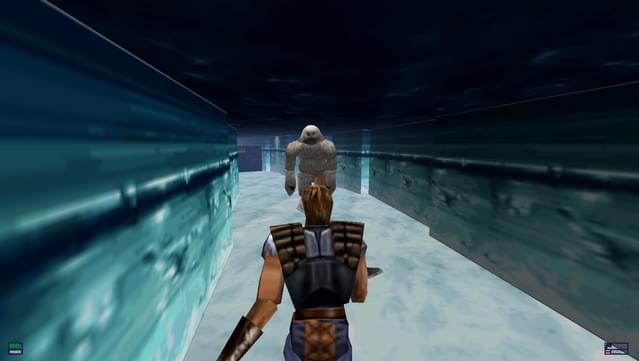
That tension is the whole review. Shadows of the Empire is not a stealth masterpiece hiding in plain sight, nor is it the kind of busted celebrity tie-in that survives only as a curiosity. It is something more interesting, and more annoying: a competent, ambitious third-person action game that knows exactly how to sell the fantasy of Dash Rendar, Hoth, blasters, speeders, and bad decisions in a galaxy far, far away, but is not always equally committed to making that fantasy feel graceful in your hands. The game is built around direct control, real-time action, third-person shooting, and vehicular combat, and it spends its time pushing you through a set of levels that move from the frozen trenches of Hoth to assorted on-foot and vehicle missions, all in service of helping Luke Skywalker and rescuing Princess Leia from Prince Xizor. If that premise sounds like the sort of expanded-universe nonsense that could only exist in the 1990s, yes, exactly. That is part of the charm. The rest is the execution, which is where the game alternates between swagger and shrugging.
The pitch is better than the plumbing
The first thing the PC version gets right is atmosphere. The enhanced presentation matters. Compared with the N64 original, this release gives the material more room to breathe, with high-resolution graphics and fully rendered CGI cutscenes that actually look like scenes, not ransom notes assembled out of pictures and text. The Red Book audio helps too, not in some mystical audiophile sense, but in the old-fashioned way that good music and voice work can make a game feel less like software and more like a place. That matters here, because Shadows of the Empire is selling a very specific sort of Star Wars daydream, the one where you are not the chosen one or the farm boy, but the cooler, scruffier mercenary standing slightly off to the side of canon and pretending that gives you better posture.
And, to be fair, it often does. Dash Rendar is a useful invention because he gives the game permission to be a bit harder-edged and a bit less ceremonially reverent than the films. You spend much of your time in third-person firefights and vehicle sequences, and the structure gives LucasArts room to toss in variety without pretending this is some elegant systemic symphony. It is a sequence-driven action game, not a puzzle box or a tactical toy, and it knows its job is to keep changing the scenery before the player notices the seams. On that front, it succeeds often enough to remain engaging. Hoth is an obvious opening, but obvious does not mean ineffective. A frozen battlefield is good videogame grammar, especially when the game is trying to convince you that its real virtue is momentum.
But momentum is a fragile thing, and this game keeps putting its boots on it.
When it works, it works because Star Wars is doing half the labor
The most flattering thing I can say about Shadows of the Empire is that it understands the pleasure of location and fantasy escalation. You are not simply moving through levels, you are moving through a Star Wars shape, with all the emotional shorthand that implies. Snowfields, vessels, corridors, speeders, blaster duels, the constant sense that a larger movie is happening just out of frame. A good licensed game does not always need to reinvent the wheel; sometimes it just needs to make the wheel look like a prop from a production design team that got paid far too little and cared far too much. This game has that. It has the deliciously preposterous confidence of a multimedia tie-in project that includes a novel, comics, soundtrack material, toys, and now a game that wants to sit at the center of the whole pile and declare itself necessary. Necessary is too strong, of course. But welcome? Yes, sometimes.
The mix of on-foot and vehicular missions helps. It prevents the game from collapsing entirely into one note, and it gives the player enough texture to keep the trip from feeling monotonous. That said, variety is not the same as polish. The game’s structure, as observed in playthrough material, spans roughly ten levels, and that sounds tidy until you realize tidy does not automatically mean balanced. Some stretches feel like the designers are happily tossing different modes at you and trusting the brand name to carry the rest. Which, in the mid-90s, was not the worst bet in the world, but it is still a bet. If you can feel the game’s ambition more clearly than its craftsmanship, that is because the ambition was often the more expensive ingredient.
The PC release also has the usual late-90s hardware aura, that mildly conspiratorial sense that the game expects you to bring your own altar to the gods of compatibility. This version originally required a 3D accelerator card, and modern play relies on later patches or digital re-releases to smooth out the ritual. There is something almost comic about a game built from a galaxy of polished corporate myth still asking the player to become part technician, part archaeologist. Installers, launchers, registry entries, patch versions, graphics support, controller partiality, all of it reads like a small bureaucratic annex to the dream of playing a Star Wars action game in a Windows 95 world. The dream is real, but the paperwork is aggressive.
The rough edges are not charming, they are just there
This is the part where nostalgia usually starts wearing a fake mustache and telling you that inconvenience is character. I am not interested in that lie. Shadows of the Empire can be finicky, and the finickiness is not transformed into elegance just because the game has aged into a museum piece. The sources do not support every specific complaint a player might make about controls or save behavior, so I will not invent a grievance just to sound seasoned, but the broad impression is enough: this is a game whose physicality can feel awkward, and on PC that awkwardness is layered atop the usual era-specific friction of setup and compatibility. You do not come to this version for frictionless elegance. You come because the enhanced presentation makes the whole thing feel like a more substantial artifact than the console original, even if the underlying game remains a little stiff in the knees.
There is a tension between the cinematic ambitions and the direct control that never entirely disappears. Third-person action in this period often had to choose between precision and personality, and Shadows of the Empire lands somewhere in the middle, which is another way of saying it can feel serviceable without ever feeling luxurious. The action is clear enough to function, but not so supple that you forget you are wrestling with an older design vocabulary. That older vocabulary has merits, of course. It tends to prize readability, level identity, and the pleasure of progression over the modern obsession with over-coordination. Yet it also brings all the era’s favorite accessories, such as camera fuss, movement that can feel a bit stubborn, and the ever-present suspicion that “responsive” was still being negotiated in committee.
Still, I should not overplay the discomfort just to earn my grump badge. The game is playable, structurally ambitious, and often lively in the moment-to-moment sense. It is not broken so much as held together by an agreement between the player and the hardware, and that agreement occasionally frays. When it does, the fiction of the heroic underdog collapses for a second, and you see the real machine underneath, which is usually where 1990s action games reveal whether they had ideas worth pursuing. Shadows of the Empire does. It just does not pursue them with enough finesse to become untouchable.
The PC version’s upgrades matter, but they do not magically improve the game
The strongest argument for this specific release is not that it changes the design, but that it presents it more confidently. The fully rendered cutscenes and higher resolution visuals give the game a cleaner silhouette. The audio upgrade matters more than people sometimes admit, because voice and music are not decoration in a licensed Star Wars game, they are the scaffolding that tells your imagination where to stand. When the presentation lands, the game feels bigger than its systems. That is a compliment, even if it is also a confession: part of my fondness for this thing is tied to how effectively it performs Star Wars rather than how thrillingly it behaves as a pure action game.
There is also the matter of modern availability. Later digital releases, including a GOG version with compatibility fixes and an official patch line, make the game easier to revisit than many of its peers. That does not change the verdict, but it does mean the PC version is not just a fossil in amber. It remains playable, albeit with the caveat that some modern conveniences are partial or dependent on the release you are using. The point is not that the game has been rescued from history. The point is that history has been made slightly less annoying, which is often the more realistic victory.
What keeps me from loving it outright is the same thing that keeps me from dismissing it as mere nostalgia bait: it is too committed to being a real game to be reduced to licensed spectacle, but not polished enough to stand on execution alone. The result is a very 1997 kind of compromise, one that feels honest in a strange way. You can sense the production values, the multimedia intent, the confidence that Star Wars iconography can make almost any structure feel important. And sometimes it does. But importance is not the same as delight. Delight requires the player to feel that the game understands its own shape, and Shadows of the Empire only partially gets there.
So here is my verdict, plain and unsentimental. If you want a mid-90s LucasArts action game with real atmosphere, a strong sense of place, and enough variety to keep the trip moving, this PC version is worth a look, especially in its more compatible modern forms. If you want elegant combat, immaculate control, or a game that transcends its era’s awkward hardware assumptions, keep walking. This is not a masterpiece in disguise, and it is not one of those useful old games people praise mainly because they remember buying a magazine demo disc. It is a sturdy, occasionally clumsy, frequently enjoyable Star Wars side quest with enough personality to justify its existence and enough roughness to prevent sainthood. I respect it, I enjoy it in bursts, and I do not trust it for a second when it starts getting too pleased with itself.
Its strengths outweigh its flaws, but not by a landslide. Shadows of the Empire deserves its reputation as an ambitious and memorable 1990s Star Wars game, though not as some untouchable classic. It is for players who appreciate atmosphere, historical texture, and a bit of swaggering design compromise. It is not for anyone who needs modern fluidity or who confuses brand significance with quality. In other words: it is a good artifact, a decent action game, and a very familiar reminder that LucasArts, at its best and most maddening, could make you feel like you were inside a bigger adventure than the one actually running on your machine.
Score: 7/10